
KNUST Library System Strengthens Professional Integration and Institutional Understanding Through Onboarding Programme for New Senior Members
The Kwame Nkrumah University of Science and Technology (KNUST) Library System has organised a comprehensive onboarding programme for its newly appointed Senior Members of staff. The programme familiarised them with the University's library operations, administrative structures, professional responsibilities and strategic direction.
Through interactive orientation sessions, departmental engagements and familiarisation visits, participants gained first-hand insight into how the Library System functions as a unified, interconnected network serving the teaching, learning and research needs of the University community.
Familiarisation Visits Across the Library System
The newly appointed Senior Members visited the College Libraries on the KNUST main campus, the Komfo Anokye Teaching Hospital (KATH) Library, the Veterinary Library and other satellite facilities. The visits gave them a broader understanding of the varied library environments, specialised information services and user needs within the University and its affiliated institutions.
Through engagements with staff at each location, participants learnt the distinct roles of the various libraries and the importance of coordination, collaboration and effective communication in delivering consistent and responsive services across the University.
Core Duties of the Libraries Visited
Research Commons. The Research Commons is a dedicated space for postgraduate students and faculty engaged in advanced research. Unlike the general-purpose libraries, it focuses on the specialised needs of researchers. Its core duties include providing a collaborative environment for research and writing, supporting literature searches, referencing and research data management, and offering training, workshops and consultations on research skills. It also helps postgraduate students and faculty publish and share their scholarship and increase its visibility.
Student Support Services. Student Support Services provides direct assistance to library users. Its core duties include guiding students on the use of library resources and facilities, handling user enquiries, supporting registration, borrowing and access services, and helping to ensure that students receive responsive, user-centred service.
College of Arts and Built Environment Library.
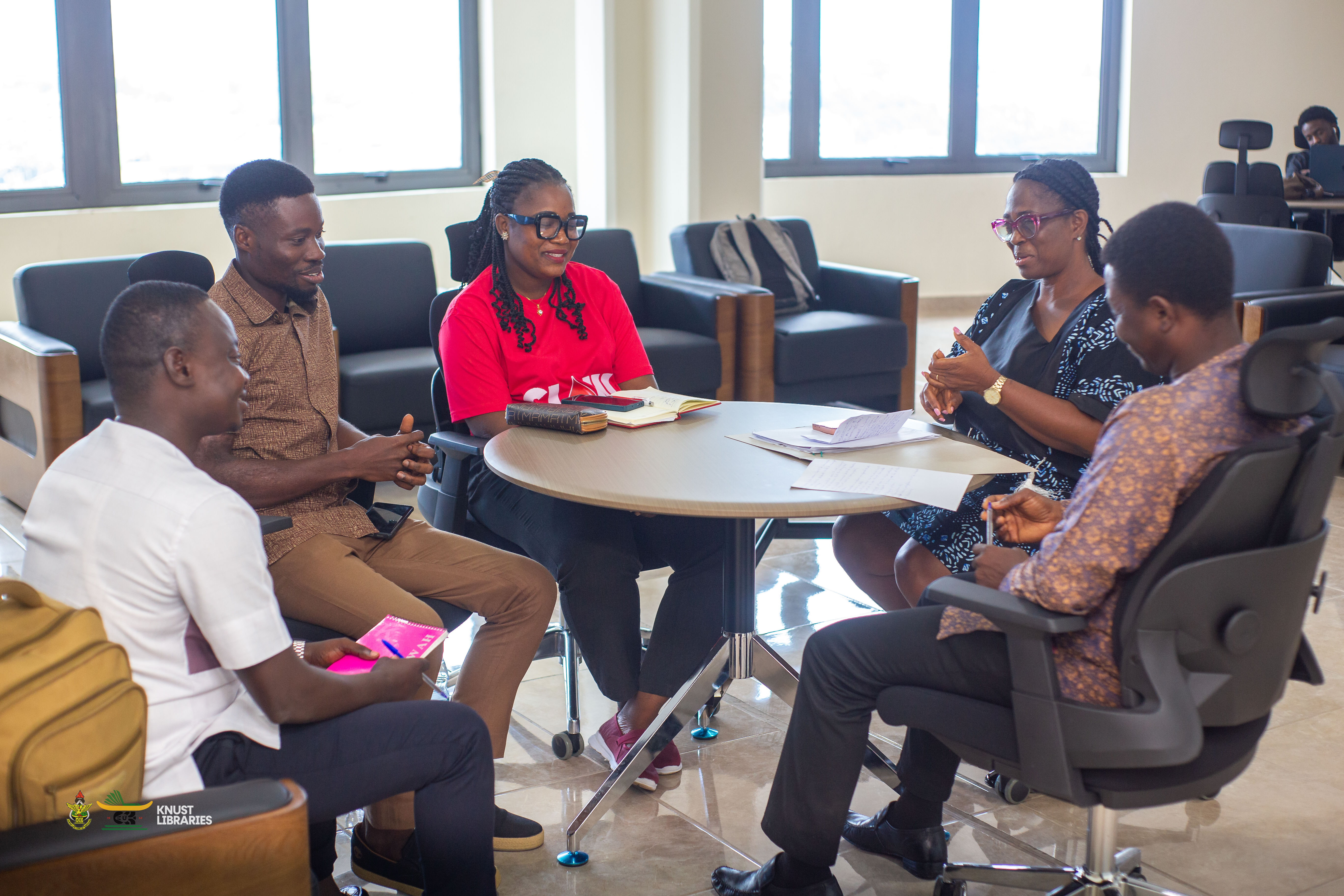
The library supports teaching, learning and research in the arts, architecture, planning, construction and related disciplines. Its core duties include acquiring and organising subject-specific books, journals, design references and electronic resources, providing reference and research support to students and faculty, and offering conducive study spaces for its users.
College of Engineering Library. The library serves students, lecturers and researchers in engineering and technology programmes. It provides technical textbooks, standards, journals, databases and reports, supports project work and research, and guides users in locating and using reliable information.
College of Science Library. The library supports the science-based programmes of the College. It provides access to scientific textbooks, journals, databases and research resources. It also assists users with literature searches and information literacy, and makes sure its collections stay current with advances in the sciences.
Law Library. The Law Library supports teaching, learning and research in law. Its core duties include providing access to statutes, law reports, legal textbooks, journals and electronic legal databases, assisting students, lecturers and researchers with legal research, and maintaining a quiet, conducive environment for study.
KATH Clinical Student Hostel Library.
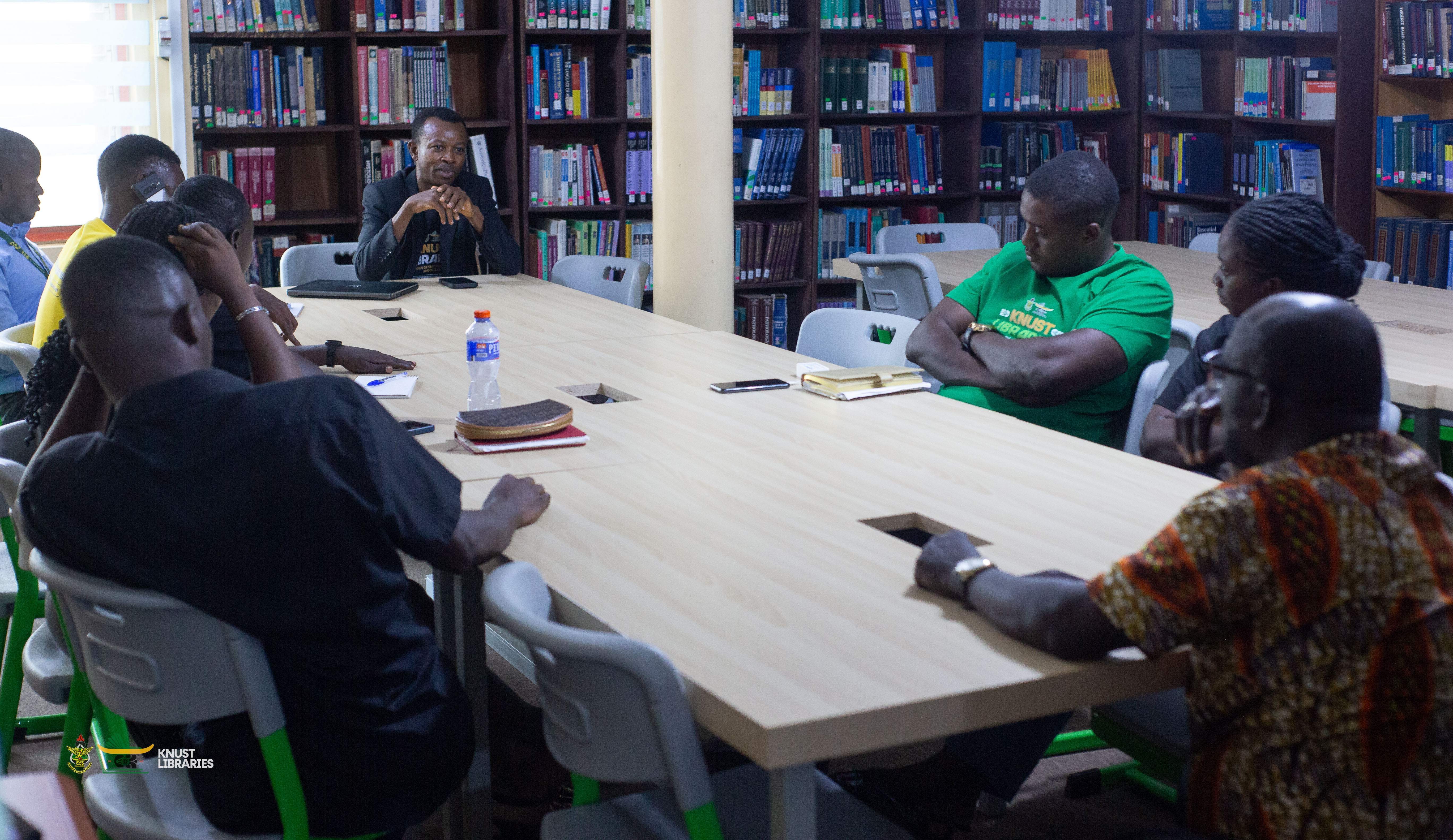
This library serves clinical students in the health sciences who train at the Komfo Anokye Teaching Hospital. It provides medical and health-related resources and a quiet study environment close to the students' clinical placements, supporting their academic work alongside their practical training.
KNUST Children and Community Library. This library extends the University's services to children and the wider community. Its core duties include promoting the reading culture, supporting early literacy and lifelong learning, providing age-appropriate reading materials and offering a welcoming learning space for children and community members.
Basic and Primary School Library. The library supports the University's basic and primary school pupils and teachers. It provides curriculum-related and recreational reading materials, nurtures reading habits from an early age and complements classroom teaching.
Library Mall. The Library Mall serves as a hub of integrated library and digital services, bringing together a range of facilities and partner units under one roof (see below).
The Library Mall: A Hub of Integrated Services
Participants were introduced to the Library Mall as a model of integrated service delivery. Its facilities and partner units include:
• University Information Technology Services (UITS), supporting network connectivity and ICT services.
• OGR and GIV, units integrated into the Library Mall's service environment.
• The E-Learning Centre, supporting technology-enabled teaching and learning.
• The Digital Shop, providing digital and ICT-related services to users.
• The Snack Room, offering a convenient space for users to refresh themselves.
• Conference rooms available for training and meetings.
• A training room equipped with laptops connected to the internet, for hands-on training, workshops and information literacy sessions.
The integration of these facilities reflects the Library System's vision of providing a one-stop environment that supports learning, research, collaboration, capacity building and digital transformation.
Understanding Collection Development and Management
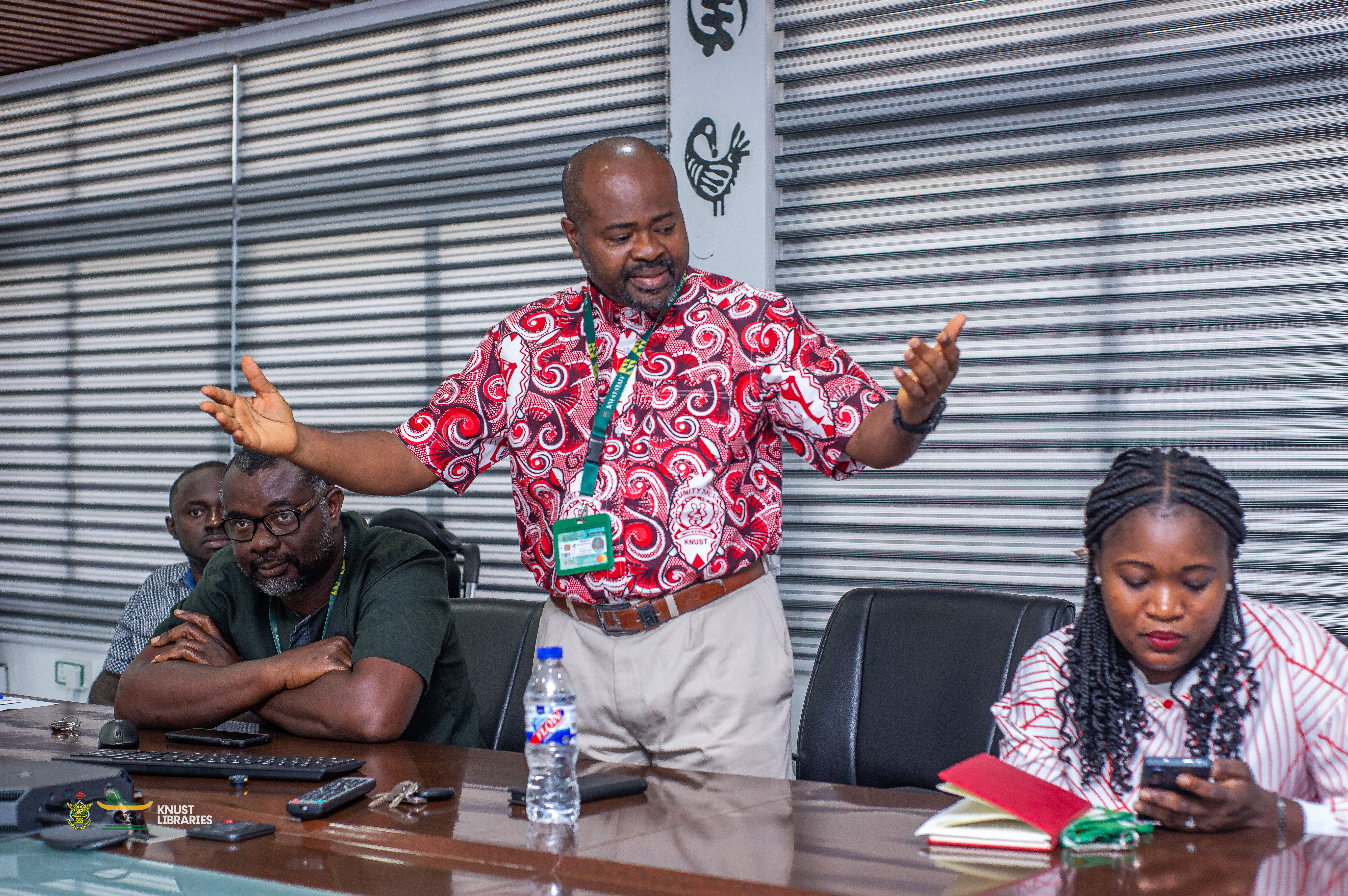
A key component of the programme was an orientation session on Collection Development and Management, facilitated by Rev. Dr. Kwabena Ofori Asiamah, Senior Assistant Librarian and Head of Collection Development and Management.
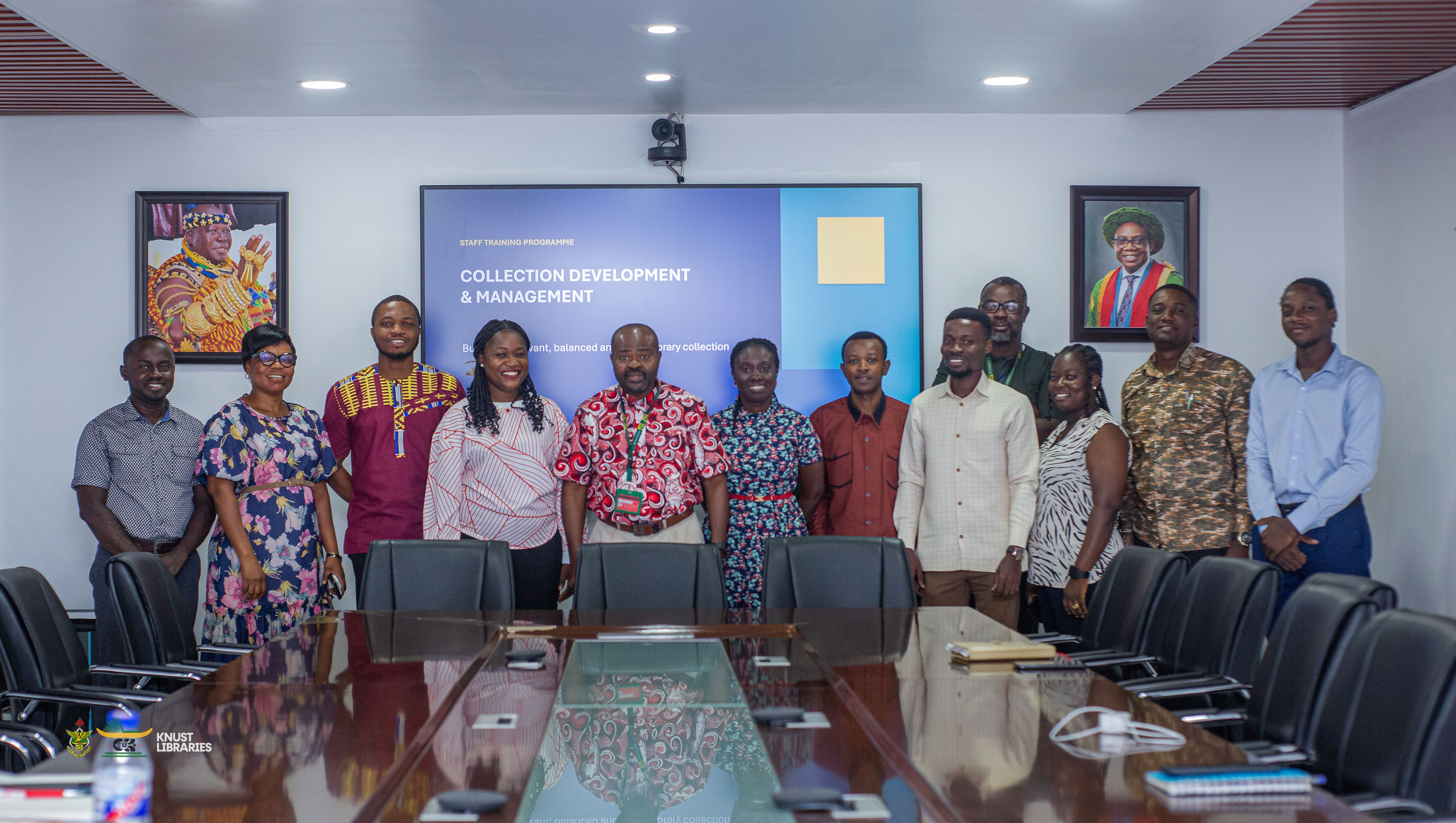
Rev. Dr. Asiamah explained that Collection Development and Management is the planned process of selecting, acquiring, organising, evaluating and maintaining library resources so that users have access to the information they need. He distinguished between collection development, which focuses on identifying, selecting and obtaining books, journals, databases and other materials, and collection management, which involves organising, assessing, preserving and updating those resources.
He noted that the ultimate goal is to make the right information resources available to the right users at the right time. Effective collection management, he said, ensures responsible use of library budgets, identifies gaps, reduces unnecessary duplication and promotes equitable access to print and electronic materials.
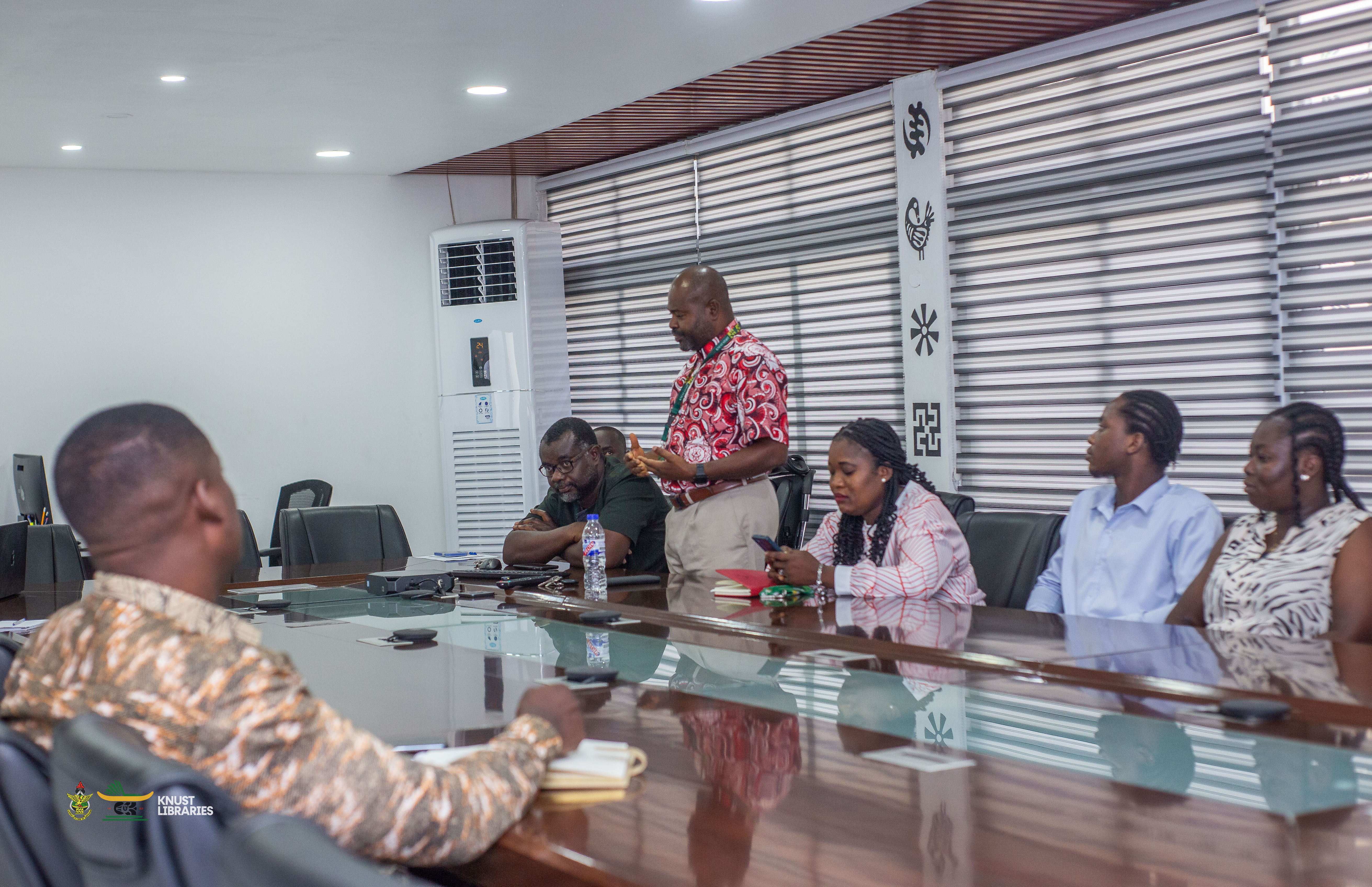
Participants were encouraged to recognise the different needs of students, who may require textbooks, reference materials, past questions and e-books, and of lecturers and researchers, who often depend on specialised books, journals, databases and reports. User surveys, borrowing records, course outlines, departmental requests and discussions with academic departments were identified as key methods of establishing these needs.
The session took participants through the six stages of the collection development cycle: needs assessment, selection, acquisition, organisation, evaluation and maintenance. On selection, Rev. Dr. Asiamah stressed the need to consider relevance, authority, accuracy, currency, quality, cost and format. On acquisition, participants were reminded to follow approved procurement procedures, verify materials against orders or donation lists, record items in the accession register or library management system, and forward them for cataloguing and classification.
He also clarified that weeding should not be regarded as simply discarding books. It is a deliberate process of improving the quality and usefulness of the collection, subject to institutional policies and proper documentation.
To reinforce these concepts, participants worked on a group activity in which a department requested ten new books but the budget could accommodate only six. They discussed how to select the six, what information would guide the decision and how to document it, applying the principles of needs assessment, prioritisation and responsible budget management.
Building Administrative Excellence and Strategic Leadership
The administrative component was facilitated by Ms. Felicia Amankwah, Senior Assistant Registrar/Library Registrar. She guided participants through the administrative structure, governance framework and professional expectations of the Library System.
Her presentation, themed Building Administrative Excellence to Eminence at KNUST Library System, emphasised accountability, strategic leadership, performance management, professional ethics and effective resource utilisation. Participants were urged to align their responsibilities with the University's strategic objectives, particularly the priorities of KNUST PLAN 2K35, which include research excellence, digital transformation, improved user experience, institutional visibility, strategic partnerships, data-driven decision-making, staff development and resource mobilisation.
Strengthening Digital and Technical Operations
The Technical Support Department (TSD), led by its Head, Mr. Setsoafia Afetsi Yao Humphrey-Ackumey, briefed participants on its mandate and its contribution to technology-driven library services. The Department operates through three units: Information and Communication Technology (ICT), Power and Electrical, and Audio-visual and Multimedia.

Its responsibilities include maintaining ICT infrastructure, supporting library automation, managing network connectivity, providing technical assistance, maintaining electrical and backup power systems, and supporting audiovisual facilities.
Among its notable achievements are the migration of the Library Management System from Alexandria to Koha, expanded access to Turnitin including AI-writing detection, improved network and wireless connectivity, enhanced audiovisual facilities at the Library Mall, and the initiation of a Library Helpdesk Management System.
The Department also outlined challenges such as inadequate technical staffing, ageing ICT infrastructure, limited funding for maintenance and upgrades, unstable power supply, and reliance on UITS and external service providers. Its strategic priorities include modernising ICT and network infrastructure, strengthening cybersecurity and data protection, expanding digital services, institutionalising helpdesk procedures, building staff capacity and improving preventive maintenance. Mr. Humphrey-Ackumey emphasised technology as an essential enabler of modern library services.
Security and Fire Safety Training
The programme also included a security awareness and fire safety training for the newly appointed Senior Members and National Service Personnel, facilitated by Ms. Amankwah with resource persons from the KNUST Fire Unit and KNUST Security Services.
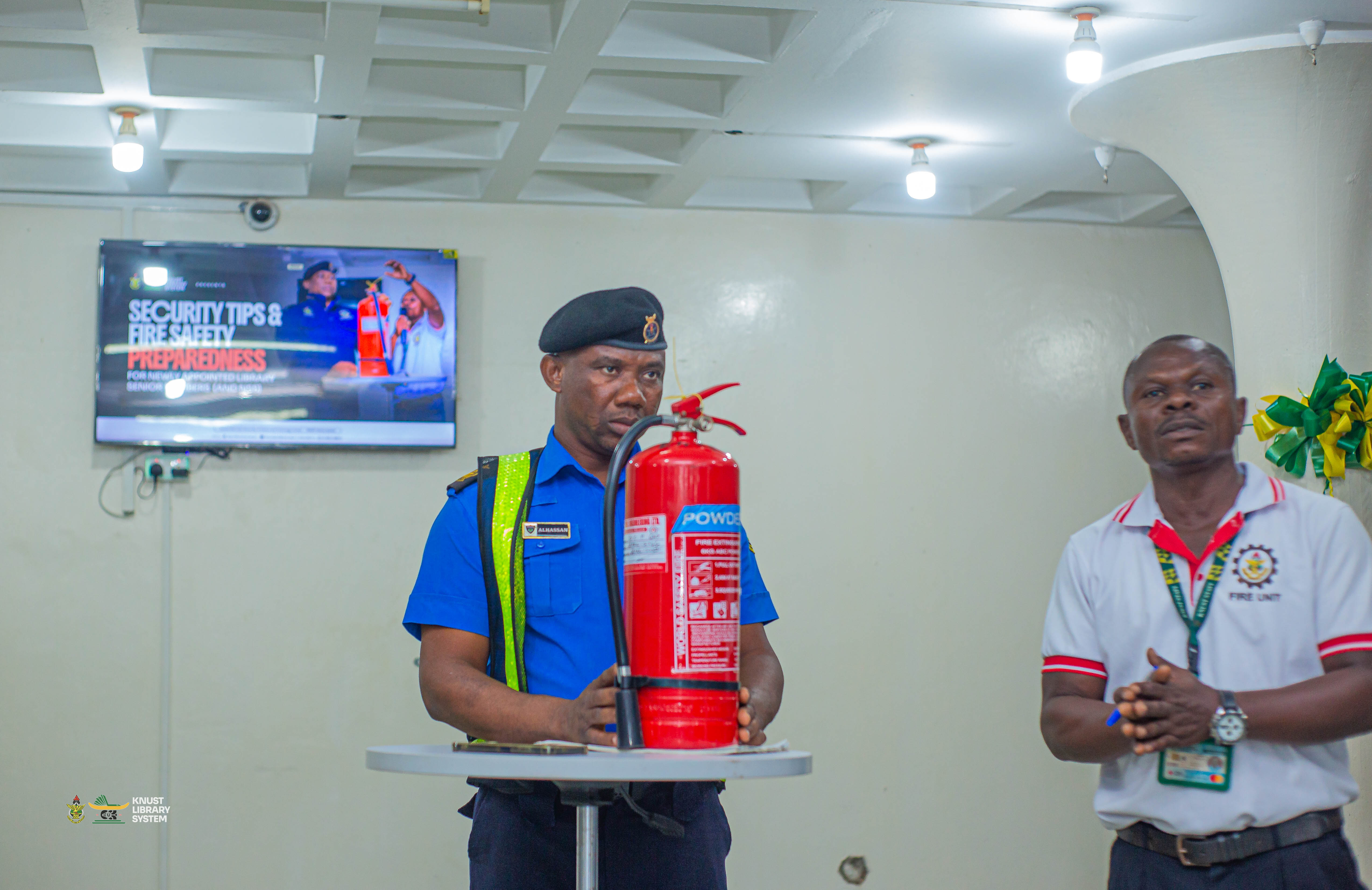
Participants were educated on remaining security-conscious, identifying potential threats, observing safety protocols and promptly reporting suspicious activities. The fire safety session covered common fire hazards, prevention, emergency evacuation procedures and the importance of knowing assembly points and exits.
The training climaxed with a practical demonstration of fire extinguisher use through the PASS technique: Pull the pin, Aim at the base of the fire, Squeeze the handle and Sweep from side to side. Participants were cautioned against using water or wet cloths on electrical or flammable-liquid fires, and advised instead to raise the alarm, evacuate when necessary and leave fires beyond their capacity to trained personnel.
In her closing remarks, Ms. Amankwah thanked the Fire Unit and Security Services and urged participants to make safety a shared responsibility.
Promoting Collaboration and Integrated Service Delivery
Beyond the formal presentations, visits to the Collection Development and Management Department, the Technical Support Department, Student Support Services and other operational units showed participants how specialised departments contribute to the overall functioning of the Library. The engagements highlighted the interdependence of administrative, technical, collection management and user-support functions in keeping library services accessible, efficient and responsive.
Equipping Senior Members for Effective Service Delivery
The onboarding programme reflects the Library System's commitment to building a knowledgeable, collaborative and professionally equipped workforce capable of meeting the evolving demands of academic librarianship. By combining administrative orientation, technical and departmental engagements, safety training and practical familiarisation visits, it gave the new Senior Members a holistic understanding of the Library System's operations, institutional expectations and strategic priorities.
Through continuous staff development, effective collaboration and strategic institutional integration, the KNUST Library System remains committed to delivering responsive, innovative and impactful services in support of the University's vision of excellence in teaching, learning, research and knowledge dissemination.