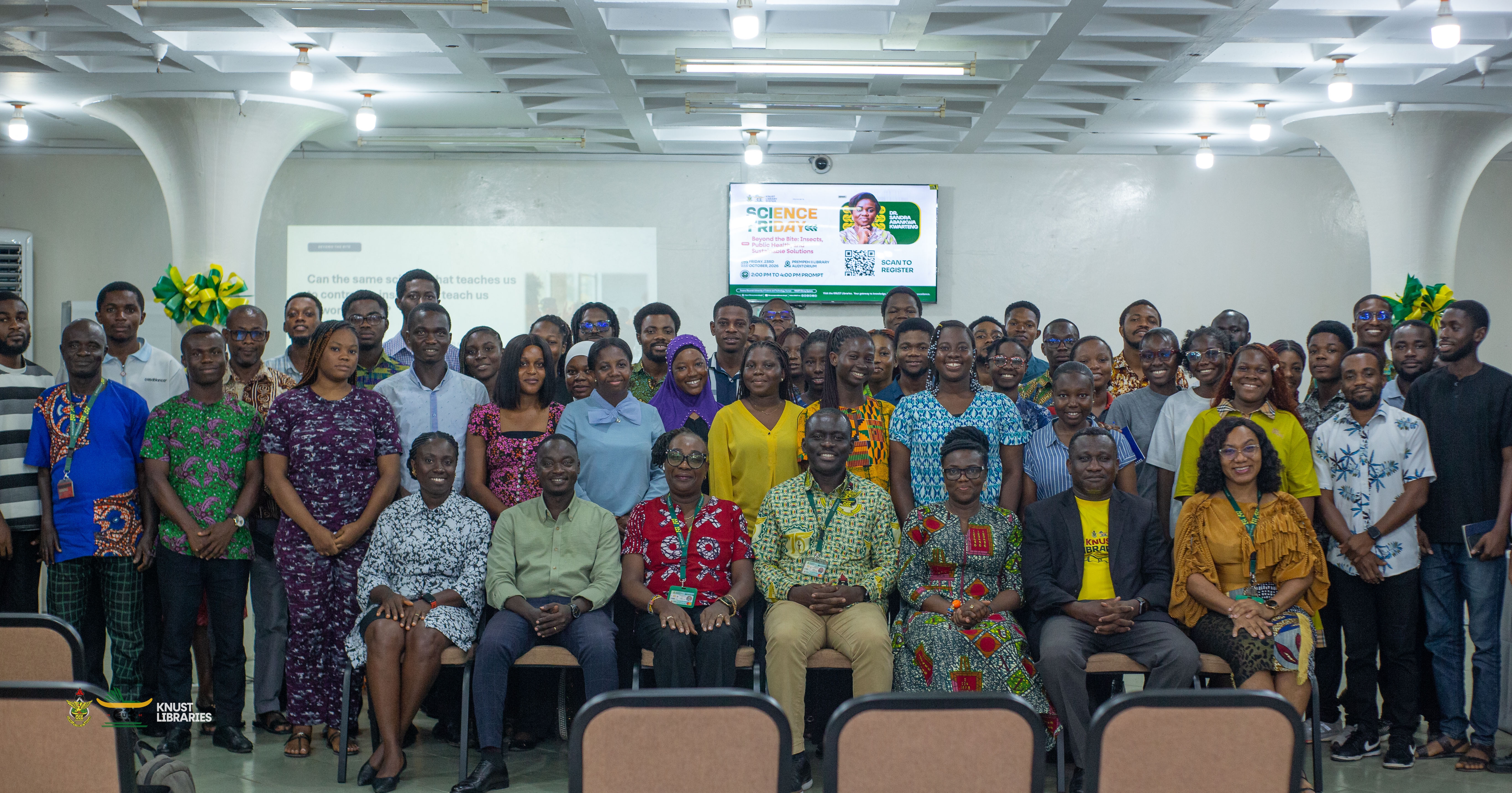
Science Friday, Episode 10: Beyond the Bite: Insects, Public Health, and Sustainable Solutions
A researcher at the Kwame Nkrumah University of Science and Technology, Kumasi (KNUST), has advocated the use of insects to manage organic waste and improve soil fertility as part of sustainable approaches to environmental management.
Dr. Sandra Abankwa Kwarteng, a Senior Lecturer at the Department of Theoretical and Applied Biology, urged a better understanding of insects to harness their benefits while controlling those that threaten public health.

She was speaking at the 10th edition of the KNUST Library System’s Science Friday initiative.
“In as much as it is true that they are problems, they can also be used as a solution. And in actual fact, as a sustainable solution,” she said.
Dr. Kwarteng highlighted the potential of insect-based approaches to waste management and soil improvement, calling for evidence-based interventions that benefit both human health and the environment.
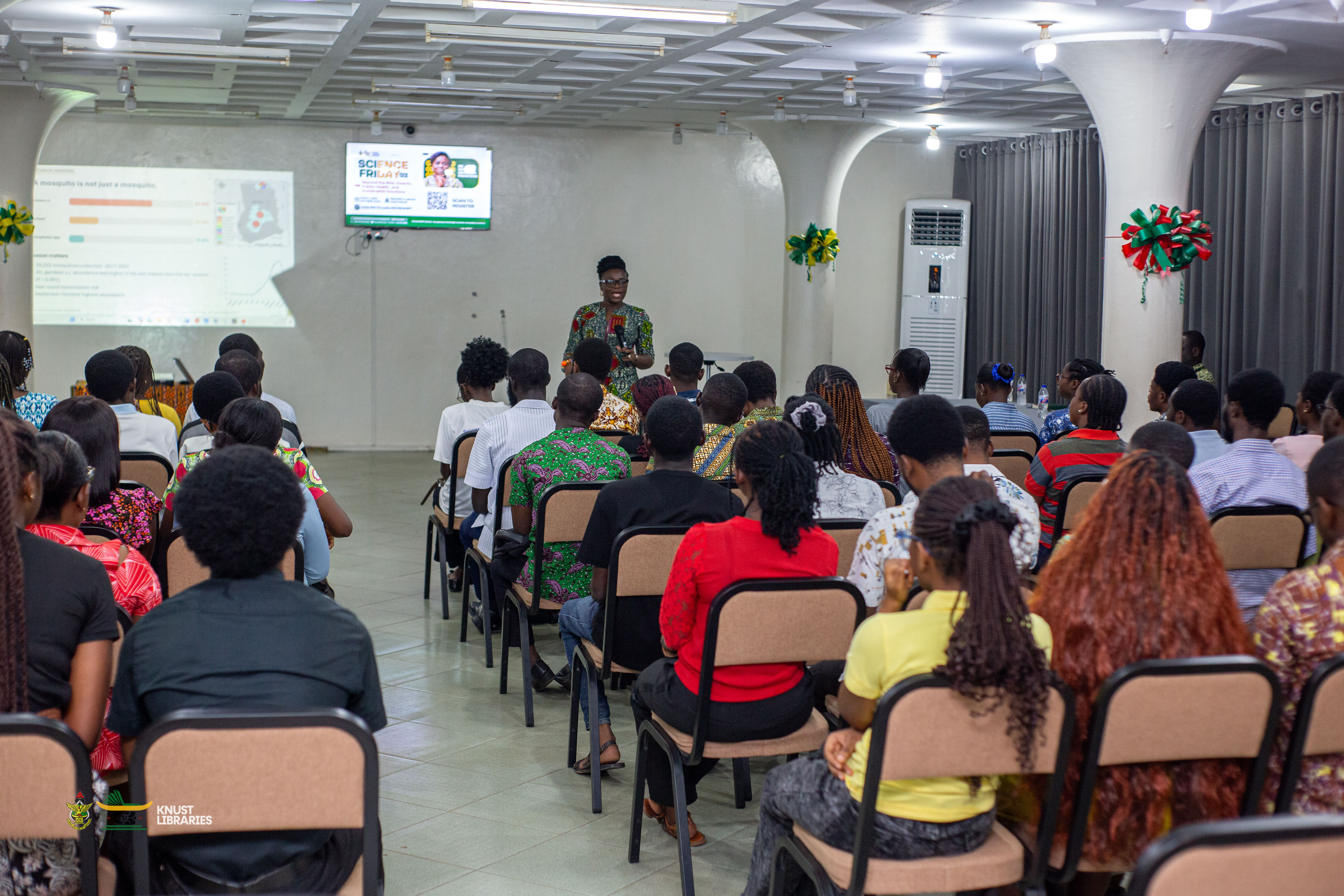
She stressed that effective insect control requires identifying species and understanding their habitats and behaviour before choosing control measures.
“It is so crucial that we don't just think about the bites. There is a whole system associated with the bites,” she said.
She cautioned against treating all insects alike, noting that different species thrive under different environmental conditions.
“If you don't know these two, you have no business controlling them. You can't. You just waste money and resources,” she said.
Dr. Kwarteng also urged researchers and public health practitioners to assess community knowledge, attitudes and practices before introducing interventions. This should include understanding activities that could increase or reduce insect populations.

“You want to really understand what they know about that particular insect,” she said.
The University Librarian, Dr. Richard Bruce Lamptey, described the discussion as timely, citing the diverse roles insects play in public health and the environment.
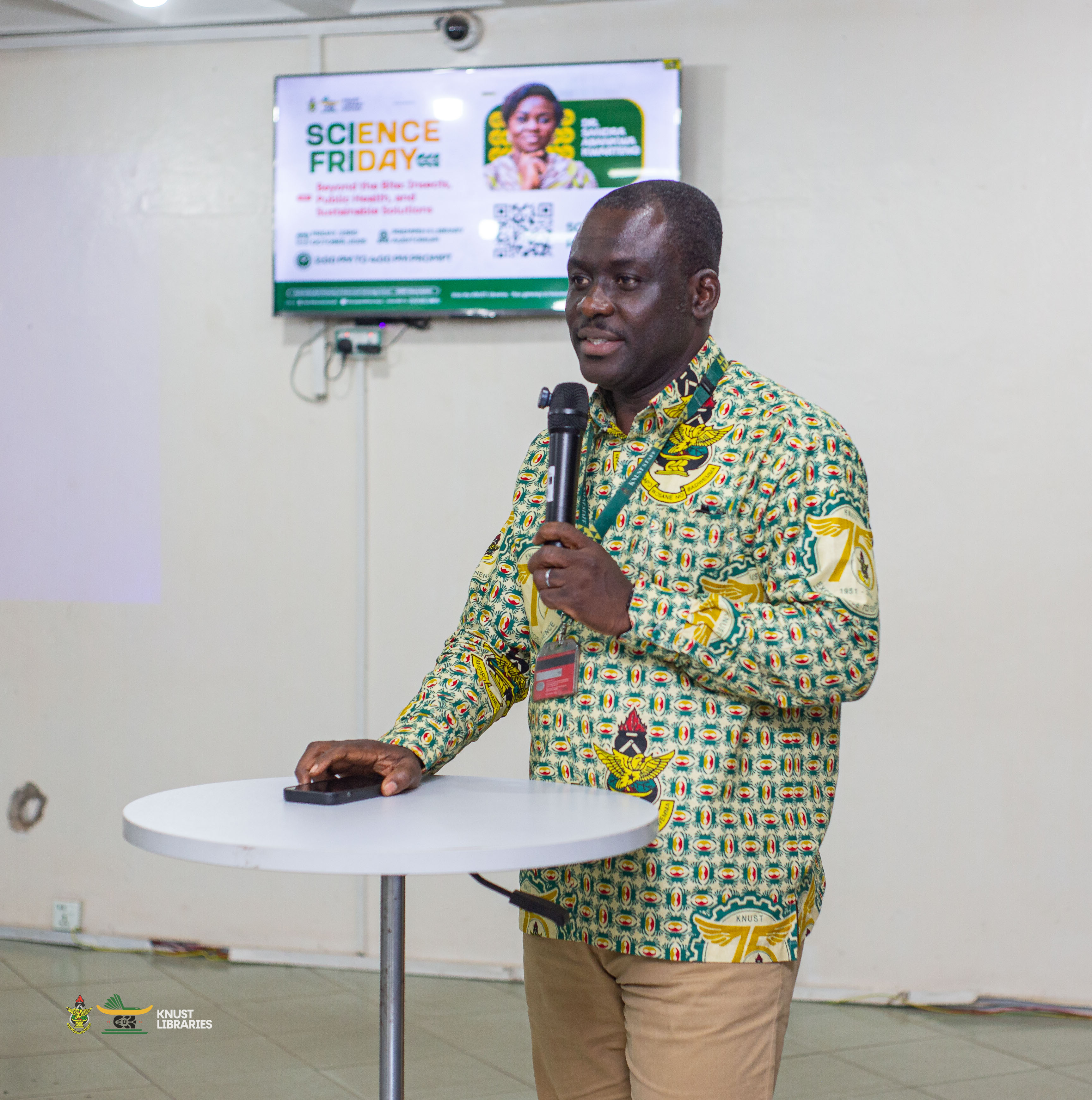
While some insects transmit diseases, others support biodiversity, food security and ecological balance, he said. He called for a more informed understanding of insects to guide interventions that protect public health while preserving the environment.
Dr. Lamptey also reaffirmed the role of university libraries as centres of knowledge creation, discovery, research and lifelong learning.
He said initiatives such as Science Friday provide opportunities for experts to share knowledge and for the university community to engage with scientific issues affecting society.