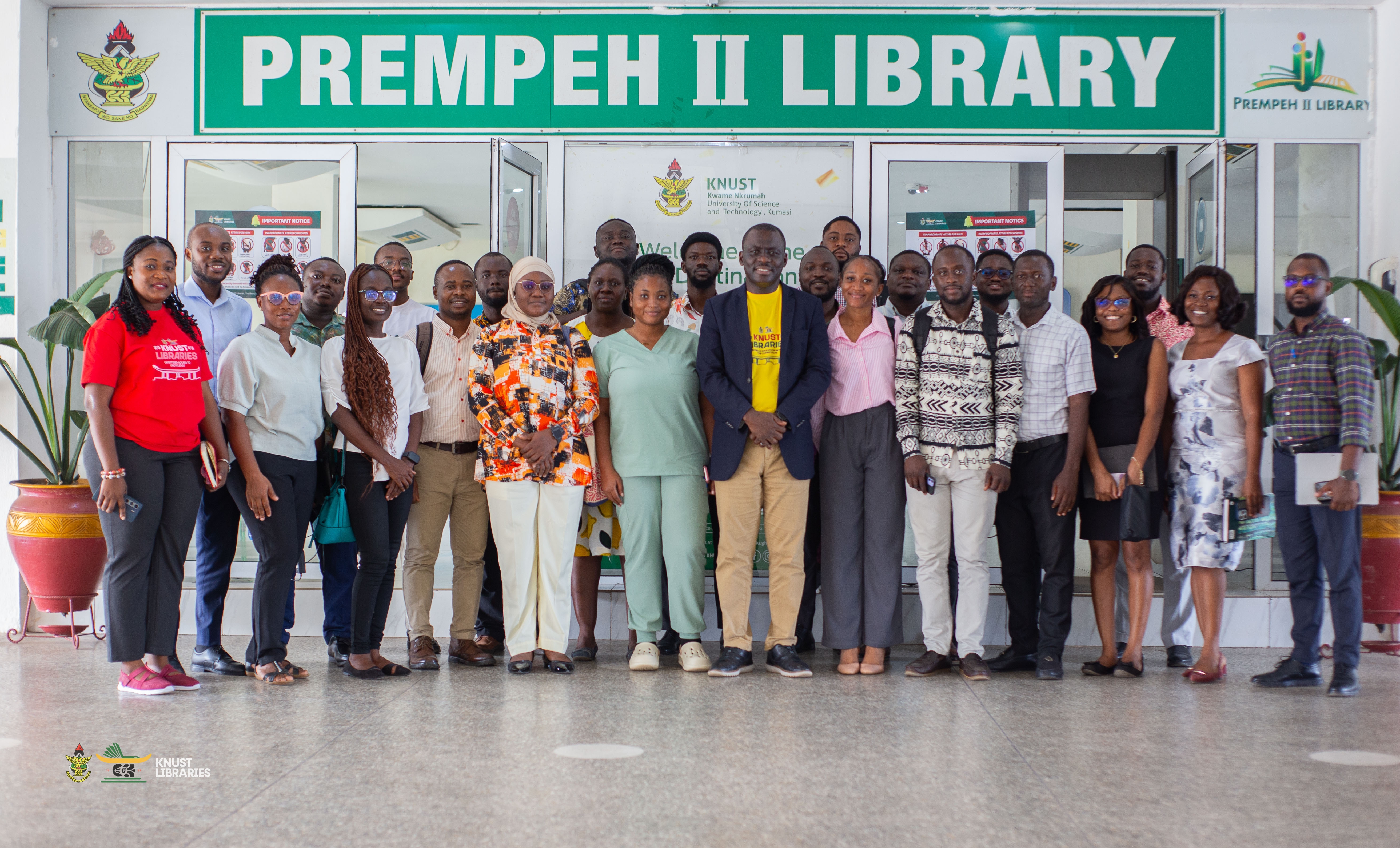
KNUST Library Trains Medical Residents in Research Skills and Ethical Publishing
The Kwame Nkrumah University of Science and Technology (KNUST) Library System has organised a training workshop for medical residents to strengthen their research skills, enhance their use of digital research tools and promote ethical scholarly publishing.
The programme was designed to equip participants with the knowledge and practical skills needed to navigate the university’s research environment, produce credible scholarly work and make informed decisions about academic publishing.
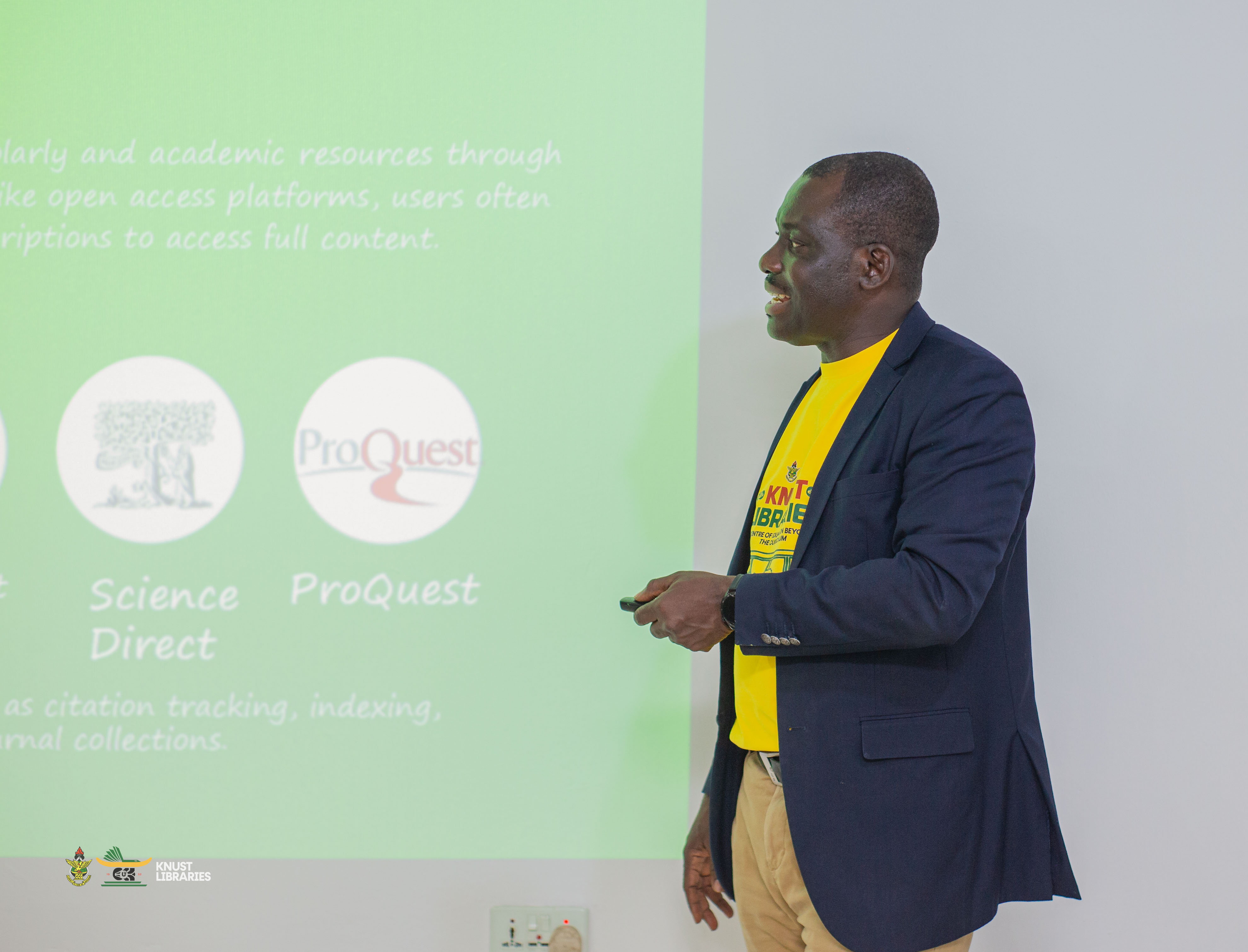
Leading the training, the University Librarian, Dr. Richard Bruce Lamptey, said the initiative forms part of the Library System’s commitment to supporting medical professionals and advancing the University’s research and innovation agenda.
He emphasised the importance of equipping medical staff with the requisite skills, tools and guidance to establish themselves as researchers and contribute meaningfully to the University’s research output.
“Medical staff need the right skills, tools and guidance to establish themselves as researchers and contribute meaningfully to the University’s research output. Through this training, we seek to provide them with the knowledge they need to conduct and publish research responsibly while increasing the visibility and impact of their work,” he said.

Participants, with guidance from senior library staff, received practical instruction on creating and managing academic profiles on platforms such as ORCID, Google Scholar, ResearchGate and Scopus. These platforms support researchers in showcasing their scholarly contributions, improving the discoverability of their publications and strengthening their academic profiles.
Dr. Lamptey noted that effective management of researchers’ online profiles could expand the reach of their scholarly work and enhance their contribution to global research and scholarship.
The training also highlighted the importance of research integrity and responsible publishing. Participants were introduced to the appropriate use of Turnitin, the interpretation of similarity reports and ways of identifying predatory journals.
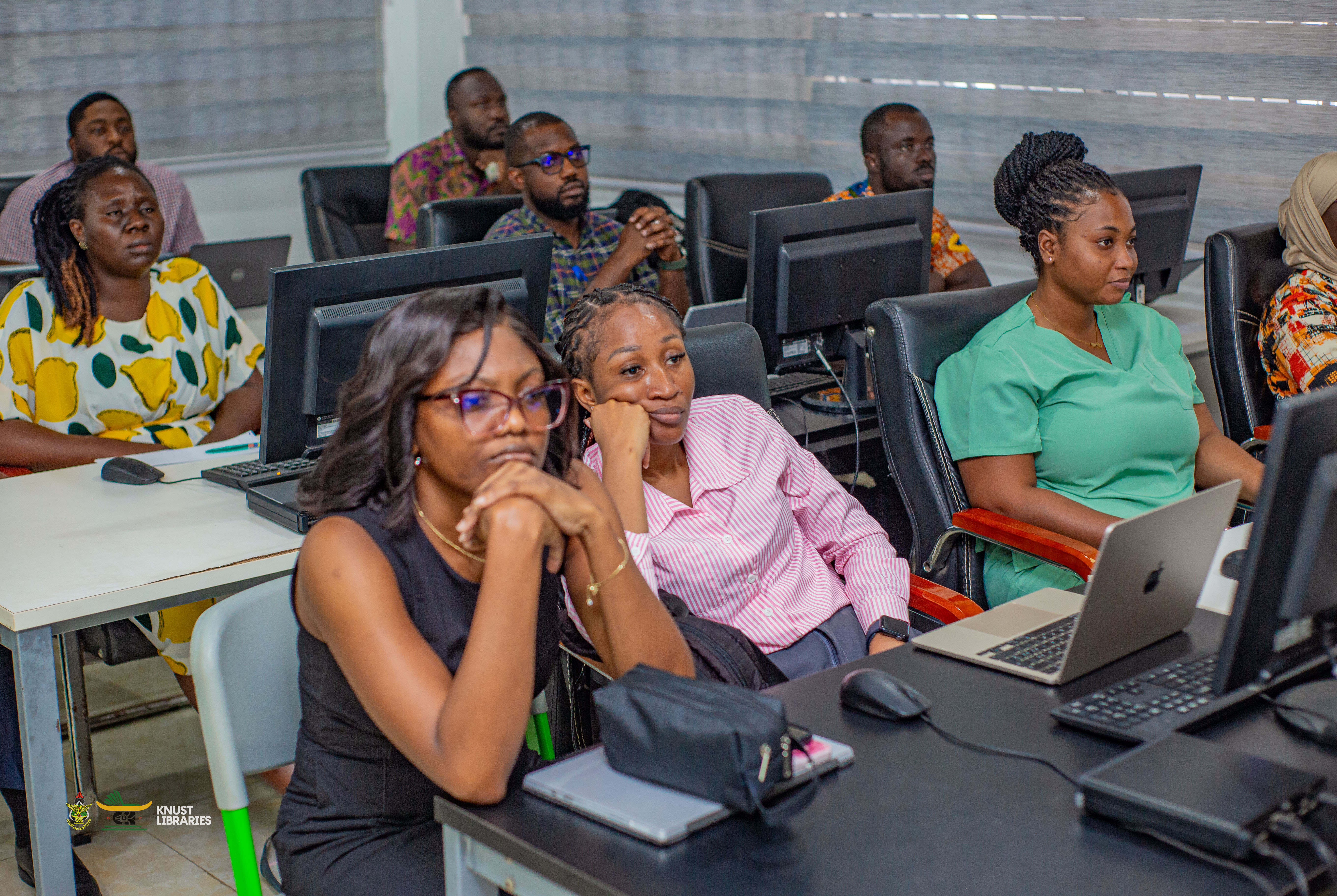
“Research integrity is fundamental to credible scholarship. You must understand how to interpret similarity reports appropriately and ensure that your work meets the required standards of originality and ethical publication,” Dr. Lamptey stressed.
Additionally, the sessions addressed the University’s requirements for verifying scholarly publications for academic promotion. Participants were also guided on accessing the Library System’s scholarly databases and electronic resources to support their research activities.
The workshop underscores the KNUST Library System’s commitment to strengthening research capacity, promoting responsible scholarship and empowering the University community with the digital and information skills needed to excel in teaching, learning and research.
KNUST Library System — Supporting Teaching, Learning and Research Excellence.