
KNUST Library Durbar Emphasises Ethics, Discipline and Professional Excellence
The KNUST Library System has reaffirmed its commitment to professional excellence, ethical conduct and effective service delivery at its 3rd Library Durbar, held on Thursday, 17 September 2026, at the Prempeh II Library Auditorium. The event, held under the theme, “Enhancing Service Delivery and Professional Excellence Through Ethics, Discipline and Punctuality in the KNUST Library System,” provided a platform for staff to reflect on professional conduct, institutional development and strategies for building a world-class library system.
Reviewing Progress and Previous Engagements The programme was moderated by Ms. Felicia Amankwah, Library Registrar, who led participants through a preview of the previous Library Durbar. The review revisited key areas addressed during the earlier engagement, including customer service excellence, staff development, security and safety, and staff participation in improving library operations. The review reinforced the importance of building on lessons from previous engagements and translating them into continuous improvements in professional practice and service delivery.
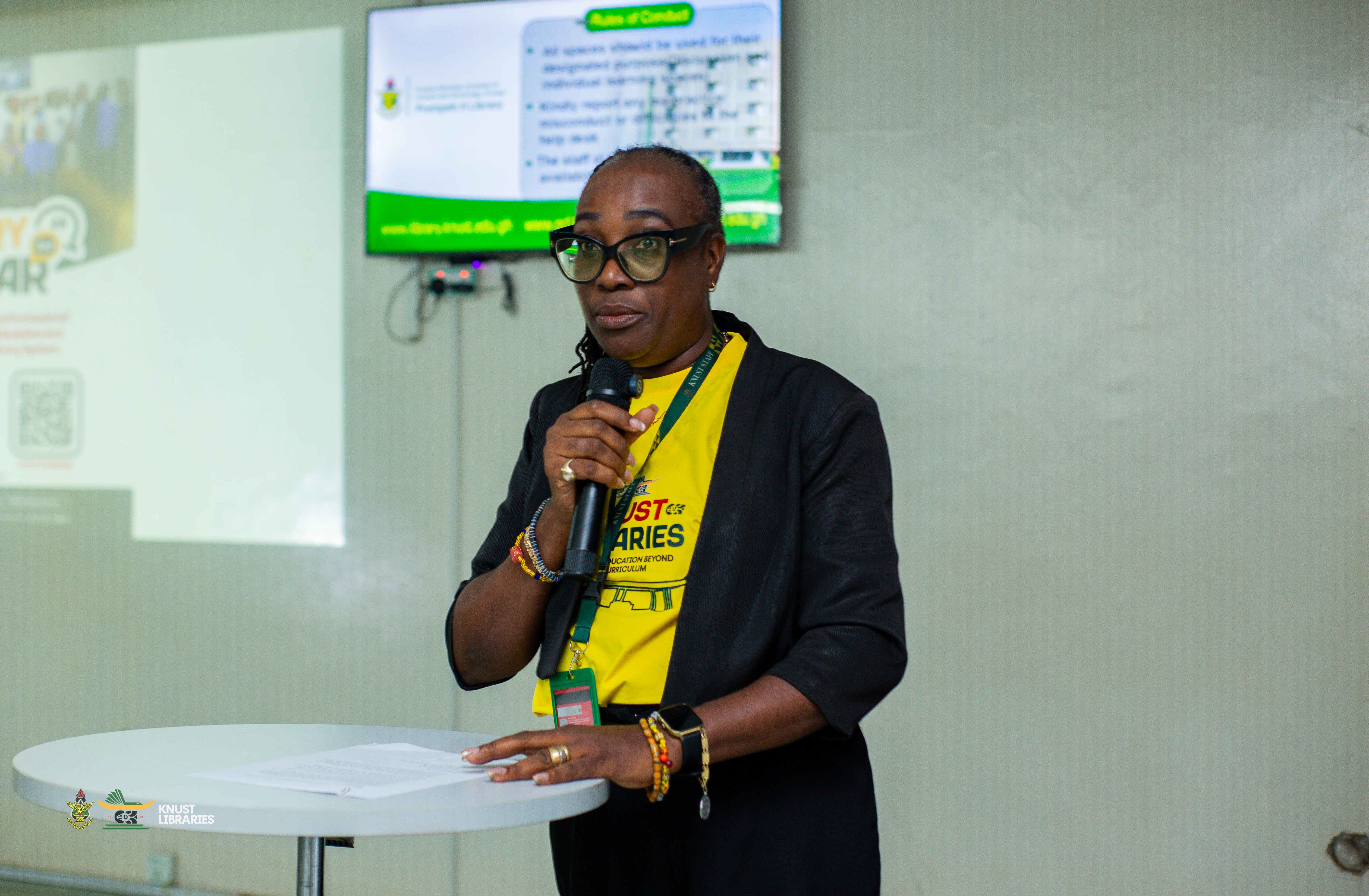
The University Librarian, Dr. Richard Bruce Lamptey, opened the Durbar by outlining its purpose and highlighting the importance of staff engagement in advancing the objectives of the Library System. He also addressed the theme, presented an overview of the state of the Library and discussed future plans and other institutional matters.

A major highlight of the programme was a presentation by Mrs. Bernice S. O. Peasah, Senior Counselling Psychologist, on “Ethics and Discipline in Building a World-Class Library System.” She emphasised that a world-class library is defined not only by its infrastructure and collections but also by the integrity of its staff, the quality of its services and the reliability of its systems.
Mrs. Peasah described ethics as the quality of being honest and having strong moral principles. She stressed that professional excellence begins with personal character, noting that “You cannot build a world-class system with second-class character.” She explained that the reputation of the Library System depends largely on the conduct of its staff and their commitment to ethical responsibilities.

She identified integrity, accountability and punctuality as the three non-negotiable pillars of a world-class library system. According to her, these values must work together to build trust, promote professionalism and improve service delivery.
On integrity, Mrs. Peasah urged staff to treat all library users fairly, irrespective of their status, and to uphold honesty and confidentiality in their professional interactions. She cautioned that favouritism and unethical practices could undermine public confidence in the Library System.
She further warned that unethical conduct could give the Library a negative reputation among users. Illustrating the consequences of favouritism, she noted that a library could acquire a reputation where “If you don't know someone there, you won't get help.” She emphasised that every user deserves equal treatment and access to library services without discrimination.
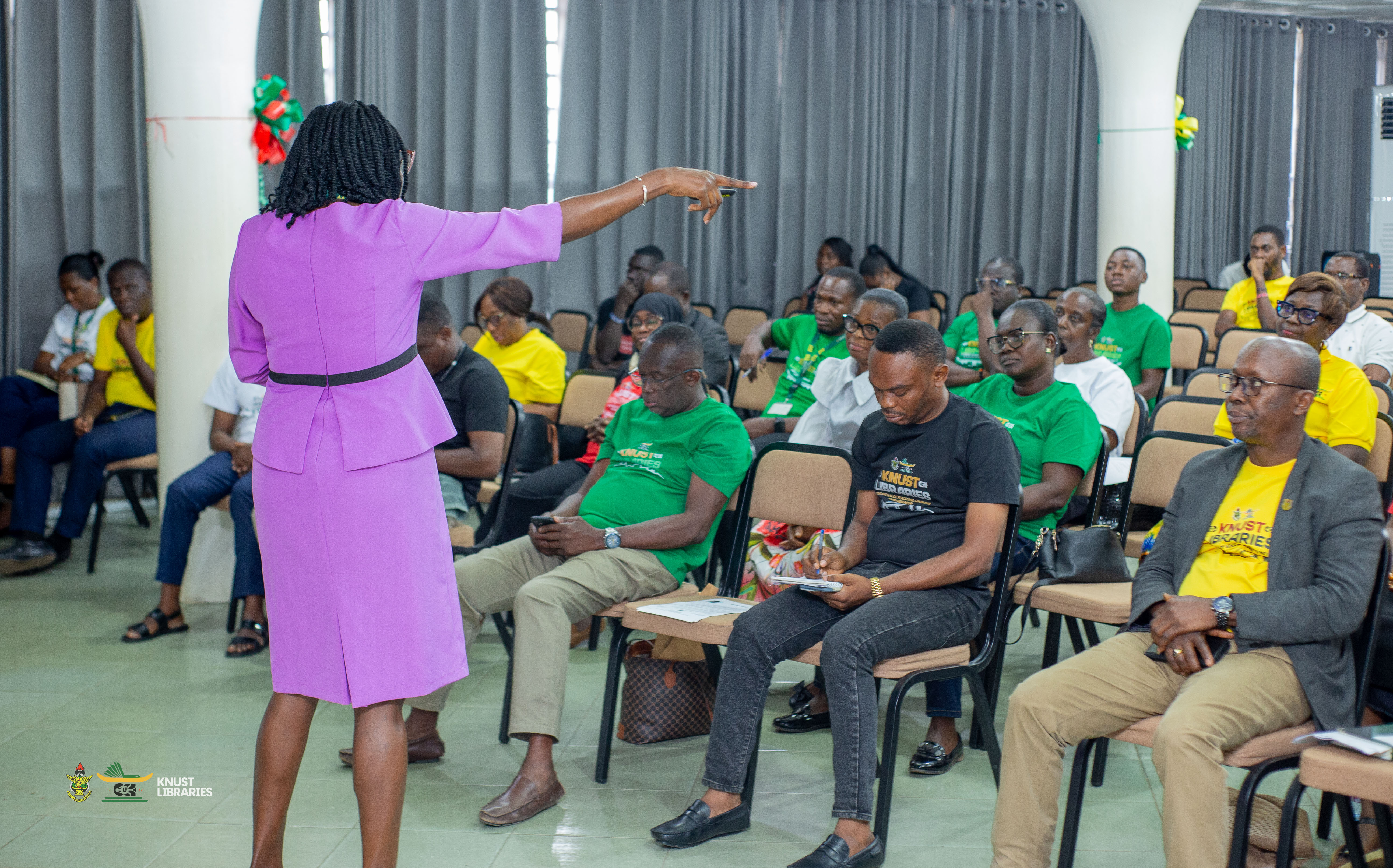
Addressing accountability, she encouraged staff to take ownership of their responsibilities, maintain accurate records and demonstrate transparency in their daily duties. She highlighted practical measures such as proper accessioning and circulation records, daily duty logs, handover notes, financial reconciliation and clear reporting structures as essential tools for strengthening accountability.
On punctuality, Mrs. Peasah described respect for time as an important aspect of ethical service delivery. Emphasising the need for discipline in the workplace, she stated, “World-class runs on world-clock, not careless delay.” She urged staff to report to their duty posts early, commence activities on schedule and complete assigned tasks within stipulated timelines.
She further highlighted punctuality as a demonstration of respect for colleagues and library users, noting that delays in service delivery could affect the efficiency and reliability of the Library System.

Mrs. Peasah explained that integrity, accountability and punctuality are interconnected and must be practised together to establish a culture of trust. She cautioned that punctuality without integrity, or accountability without honesty, would not be sufficient to achieve professional excellence.
The presentation featured an interactive discussion during which participants reflected on common acts of indiscipline in the workplace and explored practical ways of encouraging punctuality and mutual accountability among colleagues. Staff were also encouraged to make personal commitments to ethical conduct, responsible service and professional discipline.
The Durbar also provided an opportunity for the University Librarian to brief staff on the state of the Library System, its future plans and other institutional announcements. These engagements reinforced the importance of communication, staff participation and collective responsibility in achieving the Library's institutional objectives.
The programme concluded with a renewed call for staff to translate the lessons from the Durbar into their daily professional activities. The KNUST Library System continues to pursue its vision of delivering efficient, inclusive and user-centred services while strengthening its contribution to teaching, learning and research at the University.