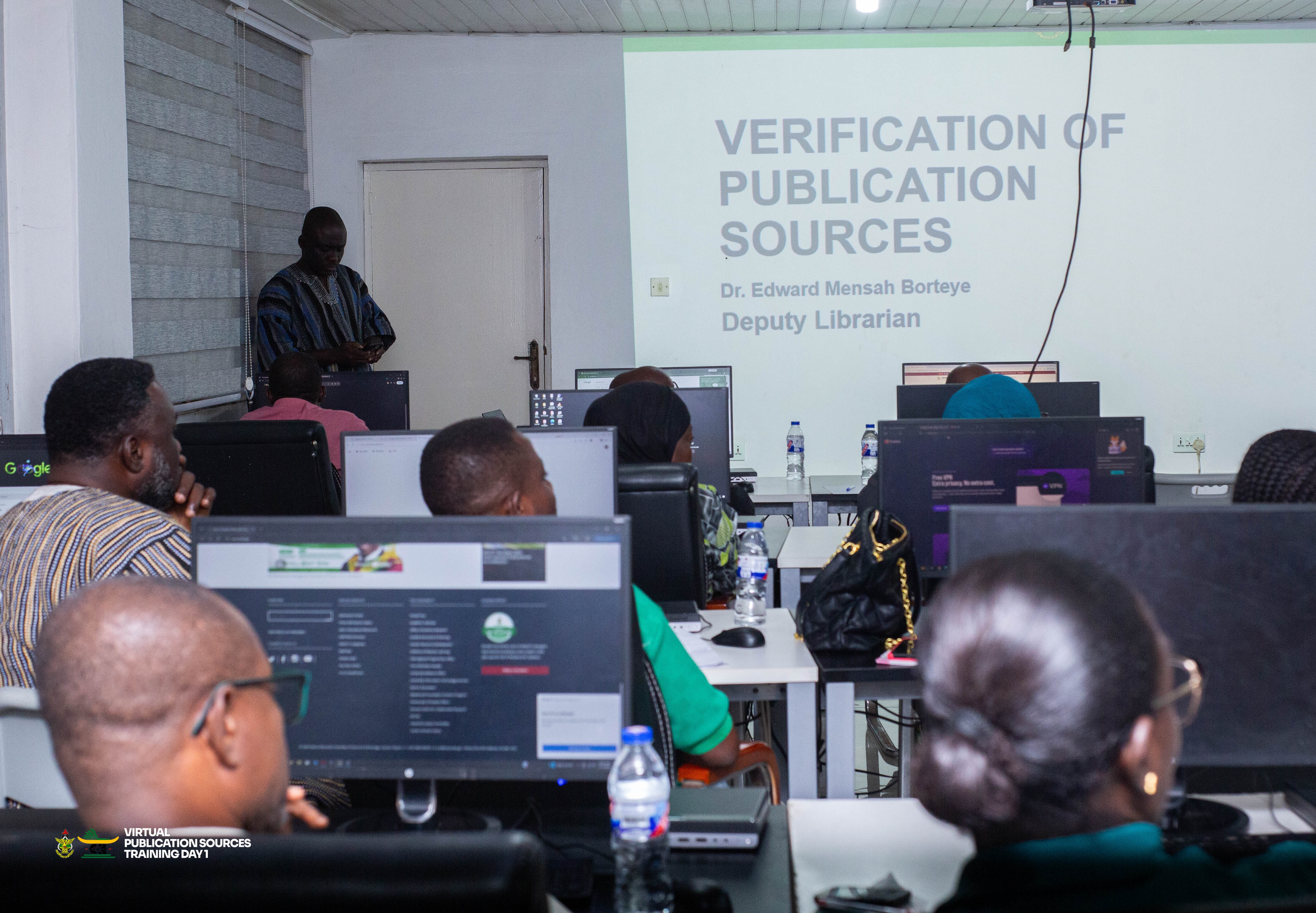
Verification of Publication Sources Training by KNUST Library
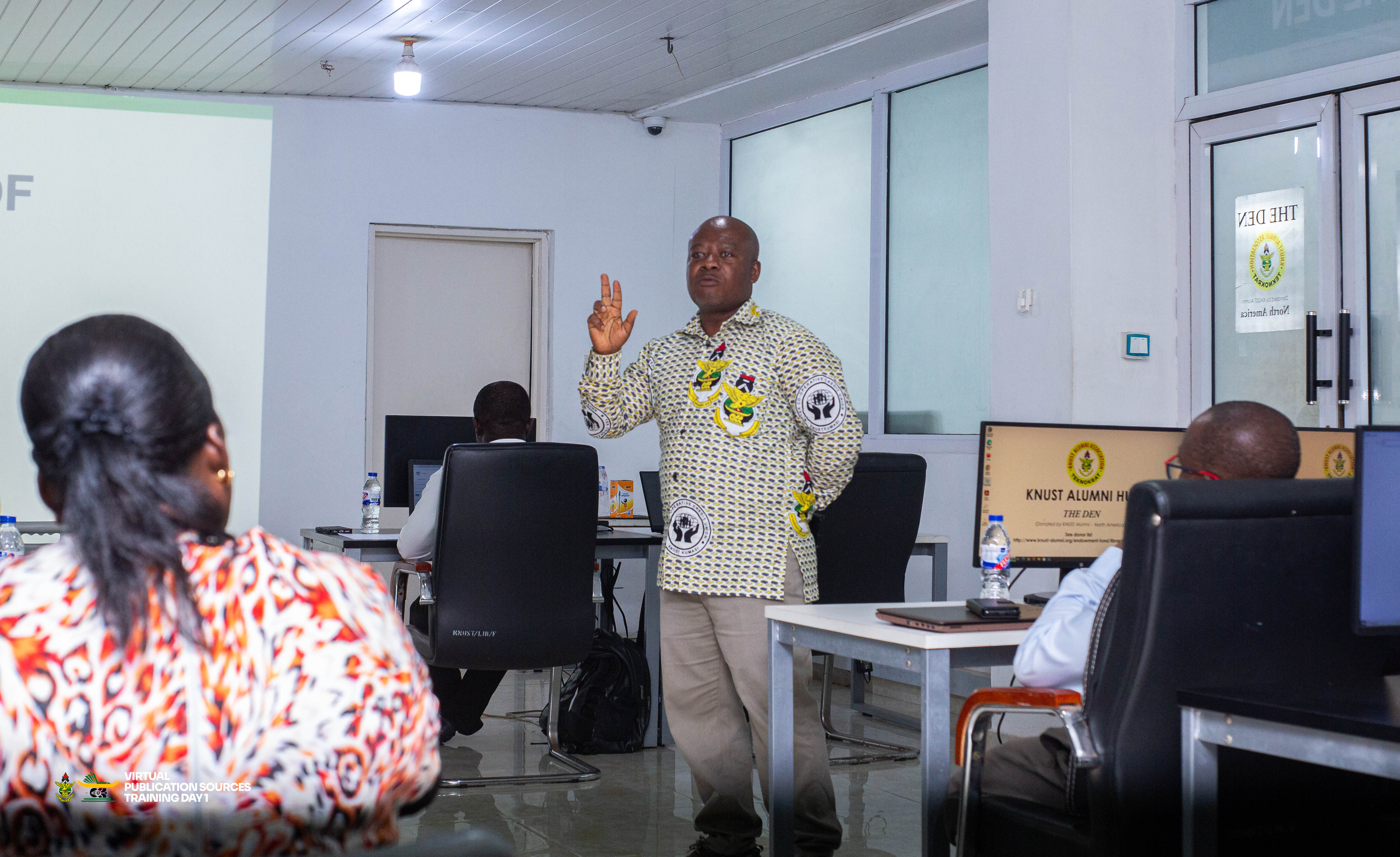
This comprehensive training guide, led by Dr. Edward Mensah Borteye, equips library staff with the procedures and ethical standards required to verify faculty publications for academic promotion. The core responsibility of verifiers is to meticulously validate each publication listed by a faculty member, ensuring accuracy, consistency, and integrity in the process.
Key tools emphasized include **Scopus** for authoritative indexing and citation counts, **Google Scholar** for public research profiles, **ORCID** for unique researcher identification, and **Sherpa/Romeo** to determine copyright and self-archiving permissions. Verifiers must confirm each publication’s presence in Scopus, audit Google Scholar profiles for accuracy (assisting in creating them if absent), and ensure every applicant has an ORCID ID.
A critical component is managing the **institutional repository**, where only authorized library staff can upload materials. Strict copyright compliance is required: only open-access versions or pre-prints (not publisher PDFs) may be archived. Sherpa/Romeo is used to verify a journal’s archiving policy.
A major focus is identifying **predatory journals**, which lack peer review and ethical standards. Red flags include unsolicited emails, extremely fast publication, high acceptance rates, fake addresses, and publishers like SciSci. Verifiers must assess a journal’s credibility based on indexing in reputable databases (Scopus, Web of Science, DOAJ), publisher legitimacy (e.g., COPE or OASPA membership), and editorial transparency—not the article’s content.
The verification process must follow the applicant’s list exactly, without reordering. Reports must include accurate citation counts (including zero), correct dates, and Scimago Journal Rank (SJR) quartiles (Q1–Q4) when available. Template reuse is risky and must be carefully audited to avoid carrying over old data.
Ethical standards are paramount. Verifiers must not inflate citation counts or backdate reports. Every page of the final report must be signed to prevent tampering. The work is permanent and impacts both the faculty member’s career and the institution’s reputation.
The guide stresses proactive support: helping researchers create Google Scholar and ORCID profiles, advising on legitimate publishing venues using tools like Think. Check. Submit., and requesting APC waivers. Training on these systems is essential, and a standardized, centralized verification workflow across colleges is recommended to ensure fairness and reduce errors.
In summary, the verifier plays a vital, behind-the-scenes role in upholding academic integrity. By conducting thorough, ethical verifications and guiding researchers, librarians support successful promotions, enhance institutional visibility, and safeguard the credibility of scholarly communication.