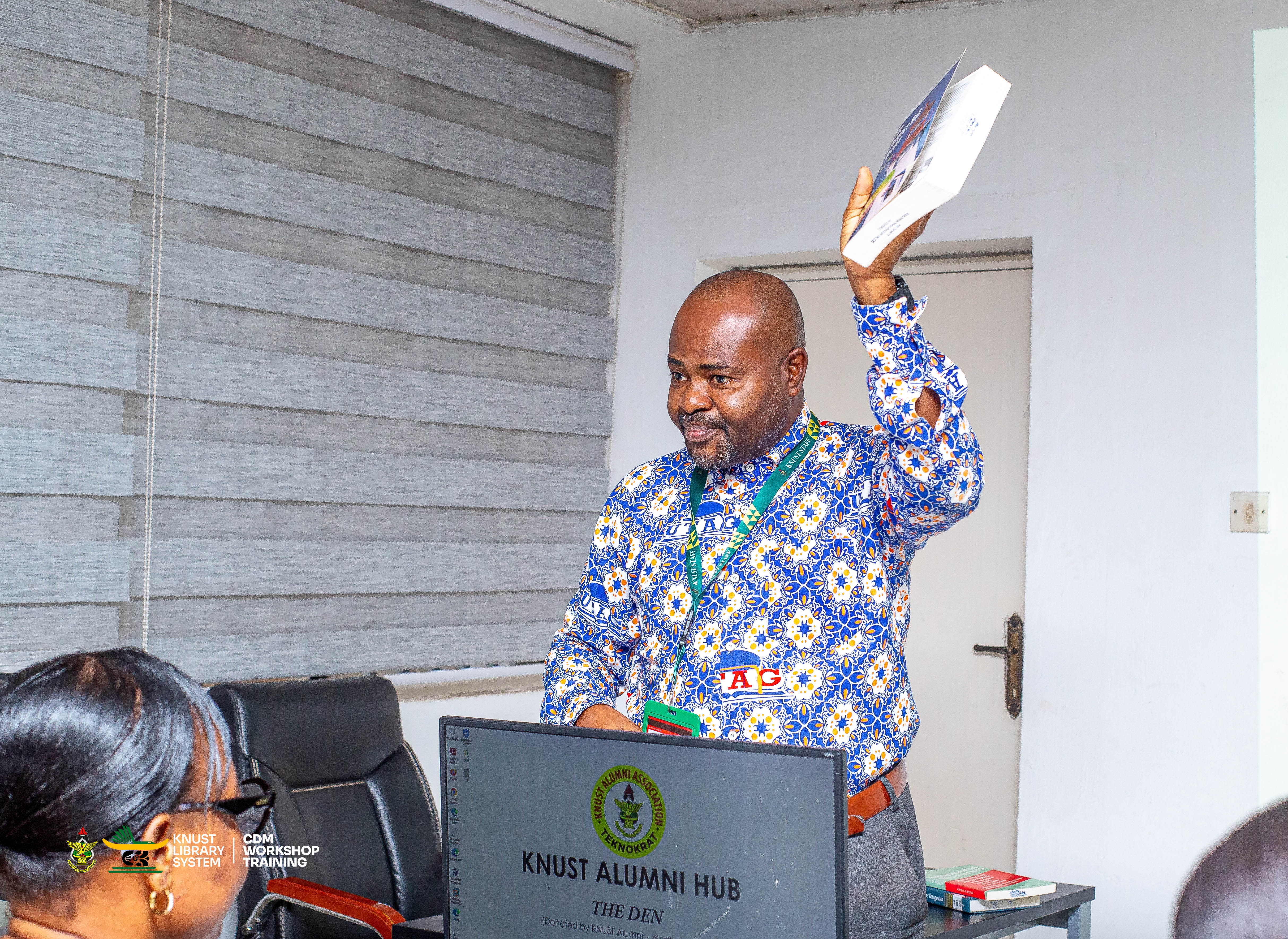
KNUST Library System Spearhead Digital Transformation with Staff Training on AI Cataloguing Tools
The KNUST Library System has organised a capacity-building workshop on AI-Powered Cataloguing, equipping library professionals with practical knowledge on how artificial intelligence is transforming cataloguing, metadata creation, and information management in modern libraries. The workshop formed part of the Library's continuous professional development initiatives aimed at enhancing staff competencies and preparing them for emerging trends in librarianship.
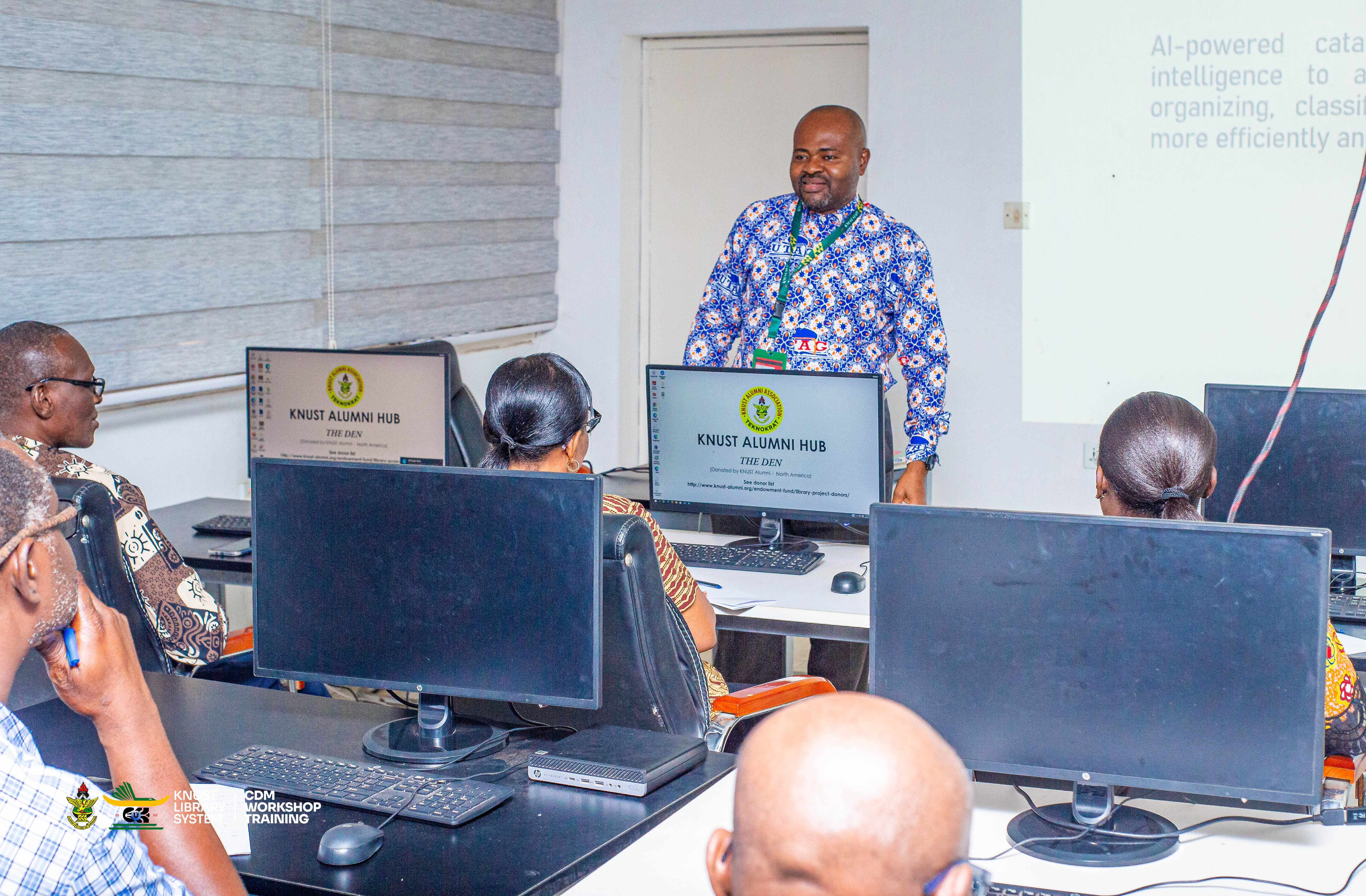
The training was led by Rev. Dr. Kwabena Ofori Asiamah, Head of the Collection Development and Management (CDM) Department, in collaboration with the Technical Support Department of the KNUST Library System. He was assisted by Mr. Setsoafia Afetsi Yao Humphrey-Ackumey, Assistant Librarian and Head of Technical Support Department at the Prempeh II Library.
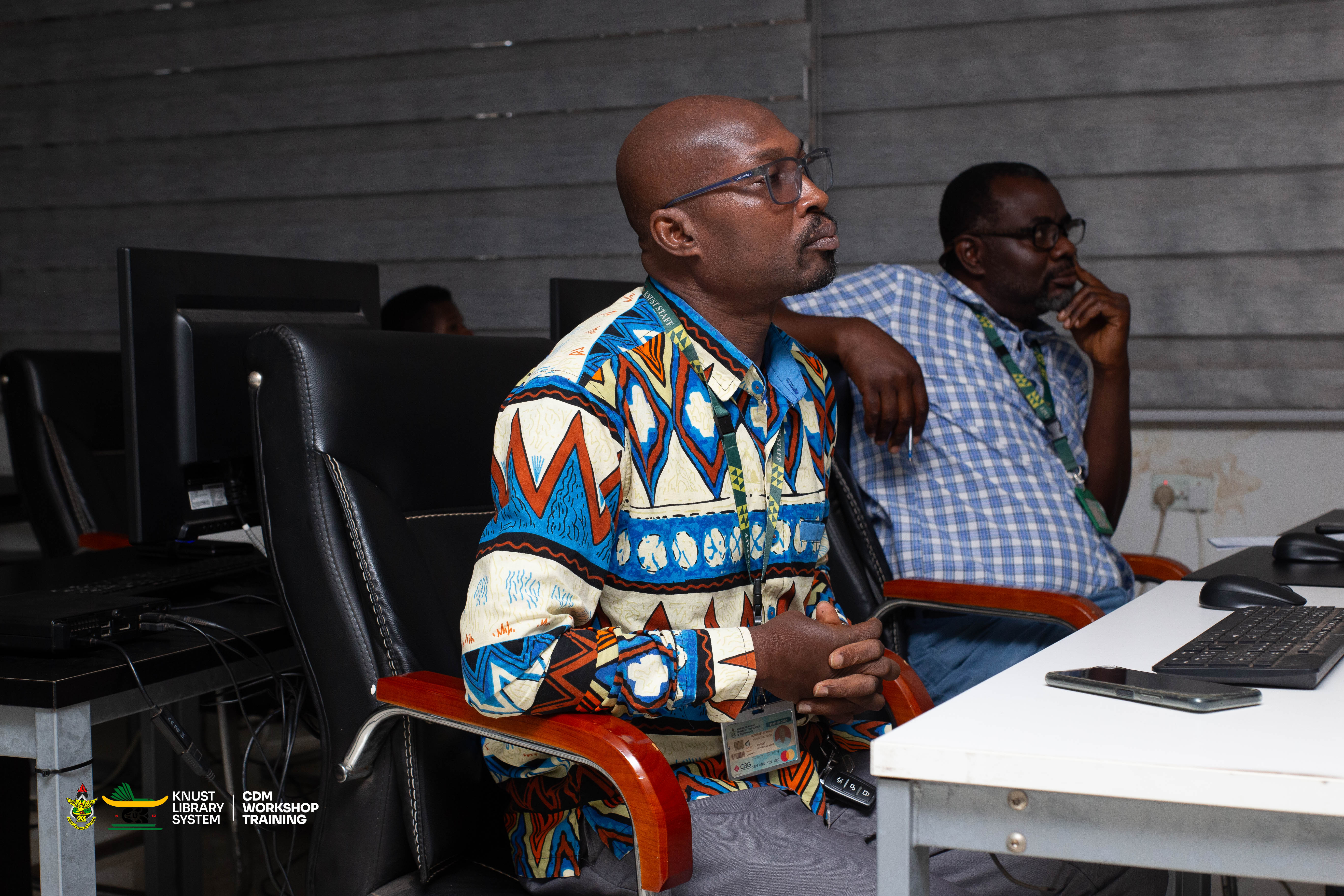
During the workshop, participants were introduced to the concept of AI-powered cataloguing, exploring how technologies such as machine learning, natural language processing (NLP), optical character recognition (OCR), computer vision, and generative AI can automate and enhance the creation of bibliographic records, metadata extraction, subject classification, authority control, and information discovery. The session highlighted AI's ability to generate MARC21 records, recommend classification numbers, improve metadata consistency, and support semantic search within library catalogues.
Rev. Dr. Asiamah also demonstrated a range of emerging AI cataloguing tools, including MarcAI, Cat & Class, Archival AI, Elicit, and evolving Koha AI integrations, illustrating how these technologies can streamline workflows, improve the management of digital collections, and strengthen institutional repositories. Participants learned that while AI significantly reduces repetitive cataloguing tasks and increases efficiency, human expertise remains indispensable in ensuring quality control, authority verification, ethical oversight, and adherence to international cataloguing standards.
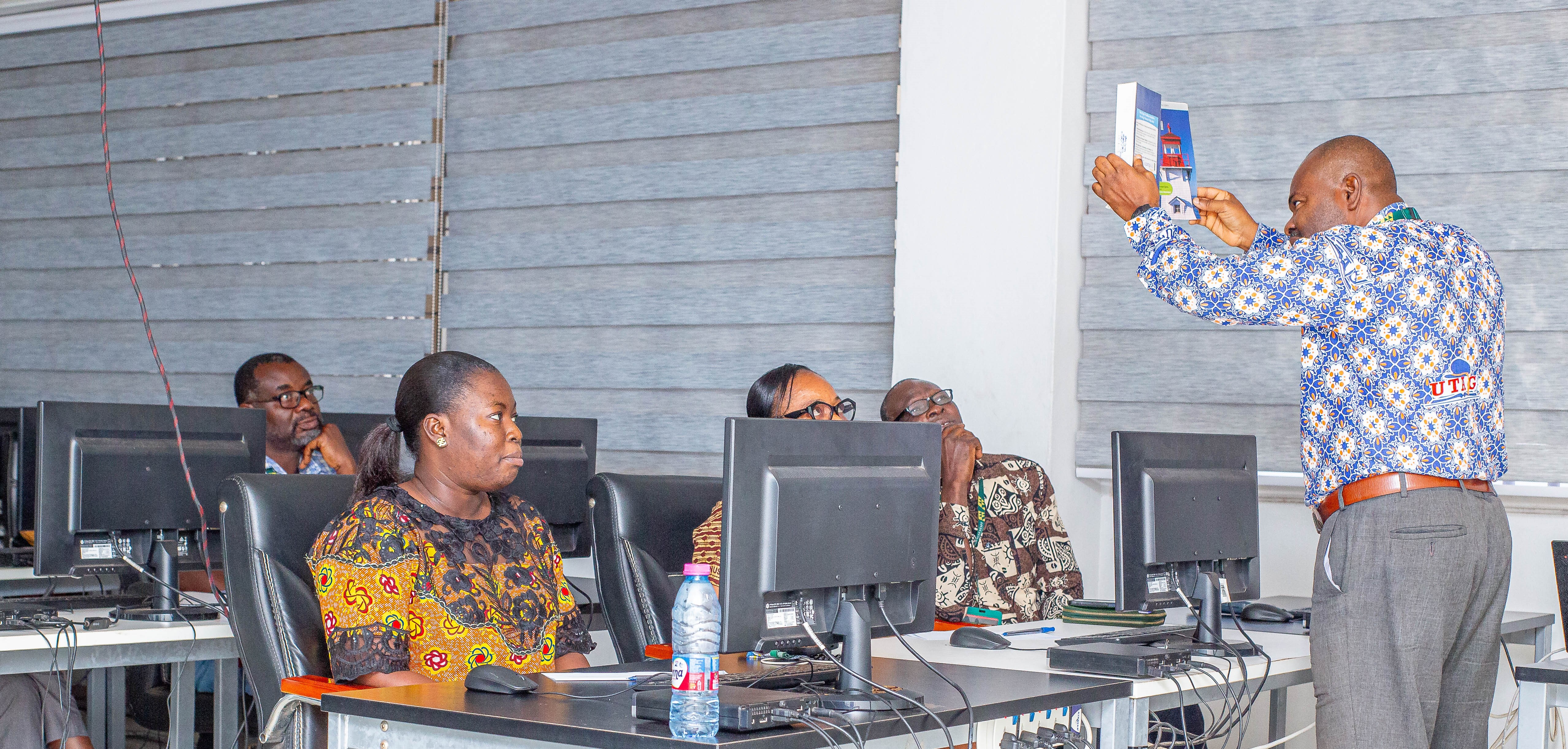
A key focus of the workshop was the potential for developing custom AI cataloguing solutions tailored to the unique needs of academic libraries. Discussions centred on AI-assisted metadata extraction, automated classification, intelligent subject heading recommendations, authority control, and integration with library management systems such as Koha. The facilitators emphasised that customised AI tools can enhance the discoverability, accessibility, and preservation of scholarly resources while supporting more efficient library operations.
Speaking during the session, the facilitators encouraged participants to embrace AI as a collaborative tool that complements not replaces the expertise of professional librarians. They noted that the future of cataloguing lies in the strategic integration of artificial intelligence with librarians' professional judgement to improve research support, digital scholarship, and knowledge organisation.
The workshop reflects the KNUST Library System's commitment to innovation, continuous staff development, and the adoption of emerging technologies that enhance library services. By investing in capacity building and digital transformation, KNUST Libraries continue to position themselves at the forefront of academic librarianship, supporting excellence in teaching, learning, research, and knowledge management.